
Hoop World: Flip Dunk Game 3D
TapNationSports
4.71.22K Reviews
- Version
- 1.98
- Installs
- 10.00M
- Age Rating
- Everyone
Screenshots
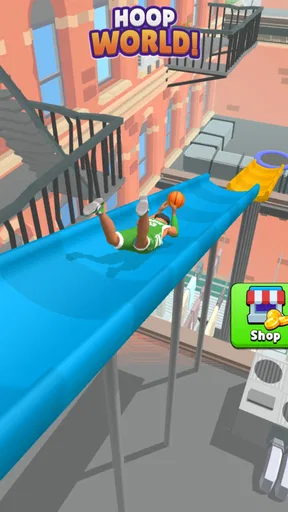
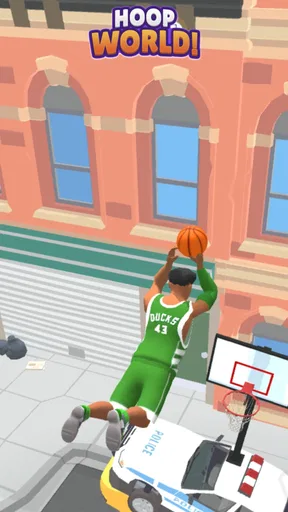
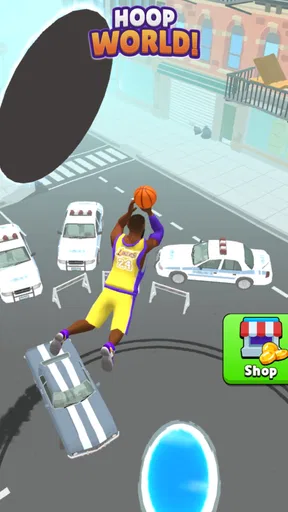
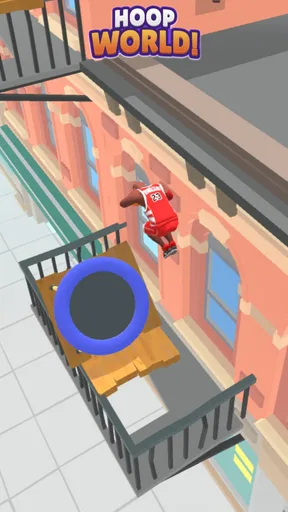
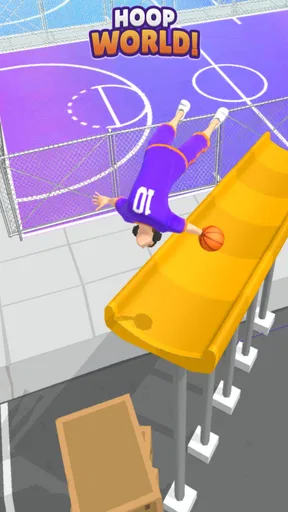
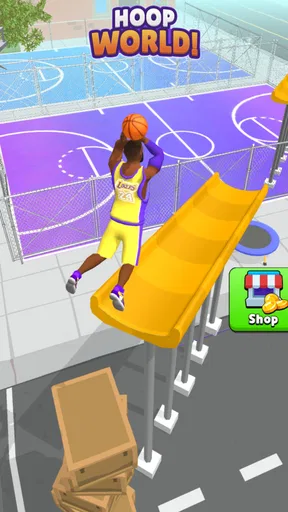
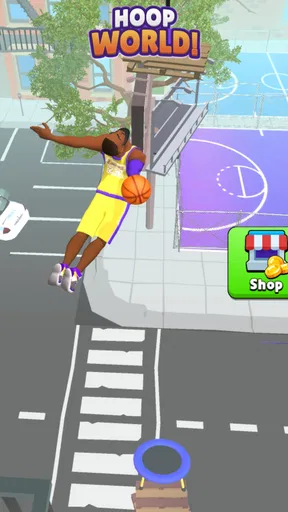
Our Review of Hoop World: Flip Dunk Game 3D
 Analysis by Appyee
I downloaded Hoop World: Flip Dunk Game 3D expecting a quick basketball distraction, and that is exactly where it works best. This is a sports game from TapNation built around timing, jumps, hoops, and portal-like changes in direction. It is easy to understand within a few seconds, but the later attempts demand more patience than the bright, casual presentation first suggests.
My favorite way to play it is in short bursts. A spare moment while waiting, a quick turn on a shared tablet, or a few attempts after dinner all suit the format. You do not need to learn a complicated control system before enjoying it, and the game does not ask me to commit to a long match. At the same time, it is not simply an automatic dunk animation: success depends on reading the movement, choosing the right moment, and accepting that a small mistake can ruin a promising run.
The game is free to download and is rated for Everyone, which makes it approachable for a household where different people want to try the same device. Its store summary describes the central idea clearly: jumping and dunking through unusual portals while aiming for hoops. After spending time with it, I would describe the appeal more simply: it turns a familiar basketball action into a compact timing challenge with a playful three-dimensional presentation.
How Hoop World fits into shared play
I find that shared play works best when everyone treats a turn as a small timing experiment, not a contest to see who can take over the screen. Agreeing on a few attempts each keeps the handoffs friendly and gives newer players room to learn. That practical rhythm also makes it easier to notice whether the game’s quick, focused challenge suits the group.
A good pass-and-play game for a household
This is particularly convenient when a phone or tablet is shared. One person can make a few attempts, hand over the device, and let somebody else try without needing a long explanation. The basic objective is visible through the action itself, so a younger player or a casual visitor can understand the point by watching one round.
I can imagine it working well during a quiet family moment when nobody wants to start a full multiplayer game. The device stays in one place, turns remain informal, and each player can compare their own timing rather than waiting through a long opponent turn. That makes the game more suitable for spontaneous household use than a sports title built around complete teams, detailed rosters, or extended matches.
There is also a useful social detail in the way failure works. A missed jump is immediate, so the next person does not inherit a complicated situation. If somebody is learning, they can experiment without affecting another player’s progress. The downside is that the game does not replace a proper competitive basketball experience. The shared fun comes from watching attempts and reacting to them, not from a deep head-to-head system.
Why short sessions are the natural format
The structure encourages repetition. I often found myself thinking, “I know what I did wrong; I will try once more,” which is a strong sign that the central loop is understandable. That loop can be satisfying when I have only a few minutes, but it can also become irritating if I keep repeating the same mistake without changing my approach.
For shared use, I recommend agreeing on a simple turn boundary before starting. A fixed number of attempts is easier than passing the device whenever someone feels finished, because the latter can lead to one person quietly taking over. This is not a built-in household feature; it is just the most practical way I found to keep the experience comfortable when several people want a turn.
The game’s quick rhythm also means it can suit someone who dislikes the commitment of a full sports simulation. There are no team tactics for me to memorize before I can enjoy a round. However, anyone looking for realistic basketball rules, player development, or a substantial season mode should choose a different kind of sports game.
What to check before handing over the device
Because this is a free game, I would set expectations before a child or guest starts playing. Free access makes the first step easy, but the game includes in-app purchases ranging from $2.49 to $99.99 per item. I would not leave a shared device with unrestricted purchasing access simply because the game itself looks harmless and carries an Everyone rating.
This is less about the basketball content and more about separating play from spending. On a family device, the person who owns the device should handle purchase decisions, while other players can concentrate on the jumping challenge. That boundary matters especially when several ages use the same screen and a younger player may not understand that an on-screen option can involve real money.
I also prefer to keep the game’s role clear: it is a free casual title first, not something every player needs to buy into. The paid options may be relevant to someone who plays frequently, but they are not a reason to introduce purchasing into a child’s turn. For occasional household play, the free starting point is enough to decide whether the core action is enjoyable.
Keeping progress and expectations separate
A shared device creates a second boundary: not every player will approach the game in the same way. One person may care about improving a difficult sequence, while another may only want to watch the character fly through a portal. I would avoid treating one player’s best result as the household’s standard, because that turns a light game into an unnecessary contest.
It is better to let each person develop a personal rhythm. A child may need time to understand when to act, while an experienced player may be testing tiny adjustments. If the game presents a challenge that feels obvious to one person but not another, patient coaching works better than grabbing the device and doing it for them.
This is also where the game’s simplicity helps. I can explain the main idea without giving a long lesson, then let the other player discover the exact timing. That keeps the shared experience active rather than turning one person into a spectator. Still, I would not assume that every player will enjoy repeated attempts; some people prefer immediate variety and may lose interest when improvement requires several retries.
What the game feels like in actual play
In actual play, the mood comes from the contrast between a playful visual setup and the concentration needed to land a clean attempt. I pay attention to the character’s approach and the hoop rather than trying to track every movement at once; that keeps the action readable and gives each retry a purpose. The next section looks at how that focused rhythm shapes the experience.
Timing matters more than basketball knowledge
The strongest part of the design is that my basketball knowledge is not the deciding factor. I do not need to understand plays, defensive formations, or realistic shooting technique. What matters is recognizing the movement on screen and acting at the right moment. That makes the game welcoming to people who enjoy sports themes but do not normally play sports simulations.
The portal idea gives the familiar dunk a more unusual shape. Instead of simply moving toward a visible basket in a conventional court, I have to follow a theatrical route that can make the next action feel less predictable. This creates a small but important trade-off: the presentation is more imaginative than a standard hoop game, while the visual spectacle can sometimes make it harder to focus on the exact timing cue I care about.
My practical tip is to stop watching the character’s entire motion and concentrate on the moment that determines the next adjustment. When I stared at everything happening on screen, I reacted too late. Narrowing my attention to the approach and the hoop made my attempts more consistent. That is the kind of useful lesson the store summary does not tell you, and it makes the difference between random tapping and deliberate play.
A simple control idea with a demanding learning curve
The controls are approachable, but approachable does not mean effortless. Early attempts can give the impression that the game is almost automatic, then a more awkward sequence exposes how much timing matters. I enjoyed that change because it gives the basic action some depth without burying it under menus or statistics.
My second tip is to use failed attempts as experiments. Instead of immediately repeating the same gesture or timing, I deliberately change one thing: I act a little earlier, wait slightly longer, or watch the approach from a different visual reference. That turns failure into information. Without that adjustment, the game can feel unfair even when the real problem is that I am repeating a habit.
This learning style is not for everyone. Players who want a relaxed game with almost no chance of failure may find the later challenge tiring. Conversely, people who enjoy refining a single action can find more substance here than the colorful presentation suggests. The important question is whether you like improving through repetition rather than unlocking a wide range of different activities.
Where it beats ordinary basketball alternatives
Compared with a full basketball simulation, this game is much faster to enter. I do not need to choose a team, learn a roster, manage a match, or spend time on a realistic court before reaching the main action. That makes it a better fit for a quick break and for a shared device where players may have very different levels of interest.
Compared with a traditional arcade hoop game, the portal-based movement gives it a more distinctive identity. The challenge is not only about aiming at a basket; it is also about following an unusual route and reacting to the changing setup. That extra layer makes the game more memorable than a basic score-and-repeat shooter for me.
There is a cost to that focus. A simulation offers strategic variety, while a simple arcade game may provide more instantly predictable controls. Here, the pleasure comes from mastering the particular timing of this game. If you want realistic basketball or a large collection of unrelated mini-games, this is the wrong alternative. If you want one clear action with a strange visual twist, it makes more sense.
Small habits that improve a shared session
When I play on a household device, I use a few simple habits. I hold the screen steady, avoid passing it during an active attempt, and let the current player finish the try before discussing what went wrong. These choices sound minor, but timing games become much less enjoyable when the device moves or several people give instructions at once.
A useful coaching method is to describe one observation rather than several corrections. For example, I might say that the attempt was late, then let the player decide how to respond. Giving a complete sequence of commands removes the discovery that makes the game satisfying. This is especially important with children: the goal should be helping them notice the rhythm, not proving that an older player can do it better.
I would also keep the volume and surroundings in mind. The game’s quick attempts make it easy to play while other people are nearby, but a shared room still benefits from a little coordination. Someone concentrating on a difficult run may not appreciate constant interruptions, while someone waiting for a turn should not have to sit through an endless private session.
Age context and trust on a shared screen
The Everyone rating matches the straightforward sports premise and the absence of a need for mature storytelling to understand the game. Even so, an age rating does not answer every household question. It does not decide how long a child should play, whether the child understands purchase prompts, or whether the game is a good fit for someone who becomes frustrated by repeated failure.
For younger players, I would introduce it as a timing game rather than promising an easy basketball experience. That wording matters because the character may look playful while the challenge still asks for concentration. I would play the first few attempts nearby, explain that misses are normal, and make it clear that purchasing is an adult decision.
For older children and adults, the bigger issue is patience. Someone who enjoys quick visual feedback may like it immediately, while someone who wants a long-term sports hobby may find the focused loop too narrow. Trust also works both ways: a player should be able to try independently, and the device owner should retain control over spending and any account-related decisions.
Performance expectations and device fit
The game supports devices running Android 7.0 or later, so its compatibility reaches back to older Android hardware. That is useful for a household using a spare phone or an older tablet, although compatibility alone does not guarantee that every device will feel equally comfortable. Screen size, responsiveness, and general condition still affect a timing-based game more than they would affect a turn-based title.
On a smaller screen, I would pay close attention to whether the action remains easy to read and whether fingers cover important visual areas. A larger tablet can be pleasant for showing the game to several people, but passing a large device around is less convenient. The best shared setup is the one that keeps the controls visible and the screen steady, not necessarily the newest device in the house.
The current version is 1.98, and the game has been available since October 25, 2021. Those details place it as an established casual title rather than a brand-new experiment. I would still judge it by the present experience: its value comes from how well the central loop fits your habits, not simply from how long it has been around.
Who should install it, and who should skip it
I would recommend it to someone who wants a free sports-themed game for short sessions, enjoys learning timing through retries, and likes a playful alternative to realistic basketball. It is also a sensible choice for a shared household device when people want to take informal turns without setting up a full multiplayer match.
I would skip it if your priority is authentic basketball. There are better choices for tactics, team building, player control, and complete matches. I would also skip it if repeated failure quickly becomes stressful, because the game’s appeal depends on trying again with a better sense of timing. A person looking for a quiet, low-pressure puzzle may prefer something less reactive.
For me, the most important trade-off is breadth versus focus. This game gives one idea a strong visual identity, but it does not try to be an all-purpose sports package. That focus is a strength during a five-minute break and a limitation during a long evening when I want changing modes and deeper progression.
My household verdict
After playing it in the way I would actually use a casual mobile game, I see Hoop World: Flip Dunk Game 3D as a lively pass-and-play option rather than a basketball replacement. It is easy to show, quick to restart, and unusual enough to hold attention beyond a single attempt. The portal-focused presentation gives ordinary dunking a distinctive challenge, while the controls remain approachable for new players.
Its large audience is understandable: the game has a 4.7 average from around 58 thousand ratings and has passed 10 million installs. Those figures suggest broad appeal, but they do not remove the personal trade-offs. The repeated timing loop will suit some players much more than others, and the available in-app purchases mean that shared-device owners should keep spending boundaries clear.
TapNation has made something that works best when expectations stay modest. I would install it for a quick break, a relaxed turn-taking session, or a child-friendly sports-themed challenge played with an adult nearby. I would not choose it for realistic basketball, deep competition, or a long-form game night. With that distinction in mind, it earns a place on my casual-games list: simple to start, more demanding to master, and best enjoyed with clear household boundaries.
Verdict
Strengths of Hoop World: Flip Dunk Game 3D
- Simple controls make dunking easy to learn.
- Trick-based gameplay keeps short sessions entertaining.
- Bright 3D visuals give the game a playful style.
- Many hoops and obstacles add variety to each level.
- Works well for quick, casual gaming sessions.
Limitations of Hoop World: Flip Dunk Game 3D
- Gameplay can become repetitive after extended play.
- Some levels may feel difficult without repeated attempts.
- Ads can interrupt the experience between rounds.
- Progression may feel slow for players seeking depth.
- Requires patience to master advanced flips and landings.
Other Releases by TapNation
View All
Thief Puzzle: to pass a level
Puzzle4.6

Guess Their Answer - IQ Games
Trivia4.4

Parking Jam: Car Parking Games
Strategy4.4

Cornhole League - Board Games
Sports4.3
Similar Picks in This Category
View All
8 Ball Pool
Miniclip.com4.8

Pooking - Billiards City
AIM TOP GAME TECHNOLOGY LIMITED - pool4.6

Carrom Pool: Disc Game
Miniclip.com4.4

EA SPORTS FC Soccer Mobile 26
ELECTRONIC ARTS4.6

World Soccer League
mobirix4.3

Soccer Cup 2026: Football Game
INLOGIC SPORTS - football tennis golf soccer4.3
Frequently Asked Questions
What is Hoop World: Flip Dunk Game 3D?
Hoop World: Flip Dunk Game 3D is a casual basketball game focused on performing aerial flips, timing jumps, and landing successful dunks. Instead of traditional five-on-five matches, it presents short obstacle-style challenges where players guide a character through hoops and platforms. The gameplay is easy to understand, but later levels require better timing, controlled movement, and careful attention to the landing area.
How do you play Hoop World: Flip Dunk Game 3D?
The main objective is to control your character while jumping, flipping, and moving toward the basket. Players generally need to tap or swipe at the correct moment to influence the character’s actions and complete each dunk safely. Timing is more important than speed, because mistimed flips can cause a failed attempt. As you progress, levels introduce more complicated layouts and obstacles that demand greater precision.
Is Hoop World: Flip Dunk Game 3D free to download and play?
Hoop World: Flip Dunk Game 3D can generally be downloaded and played without an upfront purchase, although availability and pricing may vary depending on the Android or iOS store and region. Like many free casual games, it may include advertisements, optional purchases, or other monetization features. Before downloading, it is worth checking the store listing for current details about ads, in-app purchases, and supported devices.
Does Hoop World: Flip Dunk Game 3D require an internet connection?
The basic gameplay experience may work without a constant internet connection, which makes the game suitable for short sessions while traveling or when mobile data is unavailable. However, certain features can depend on connectivity, including advertisements, updates, analytics, online rewards, or promotional content. Because requirements may change between versions, players should test the installed version in offline mode rather than assuming every feature will remain available.
Is Hoop World: Flip Dunk Game 3D suitable for children?
The game is simple to understand and does not require advanced basketball knowledge, so it can be approachable for younger players. Nevertheless, parents should review the current age rating, advertising content, privacy information, and optional in-app purchases before allowing children to play. The short levels and colorful 3D presentation are generally accessible, but repeated attempts and timing-based challenges may become frustrating for some players.
Play our best games!


